

past club wines
a running archive of the wines we’ve shared and the reasons we love them
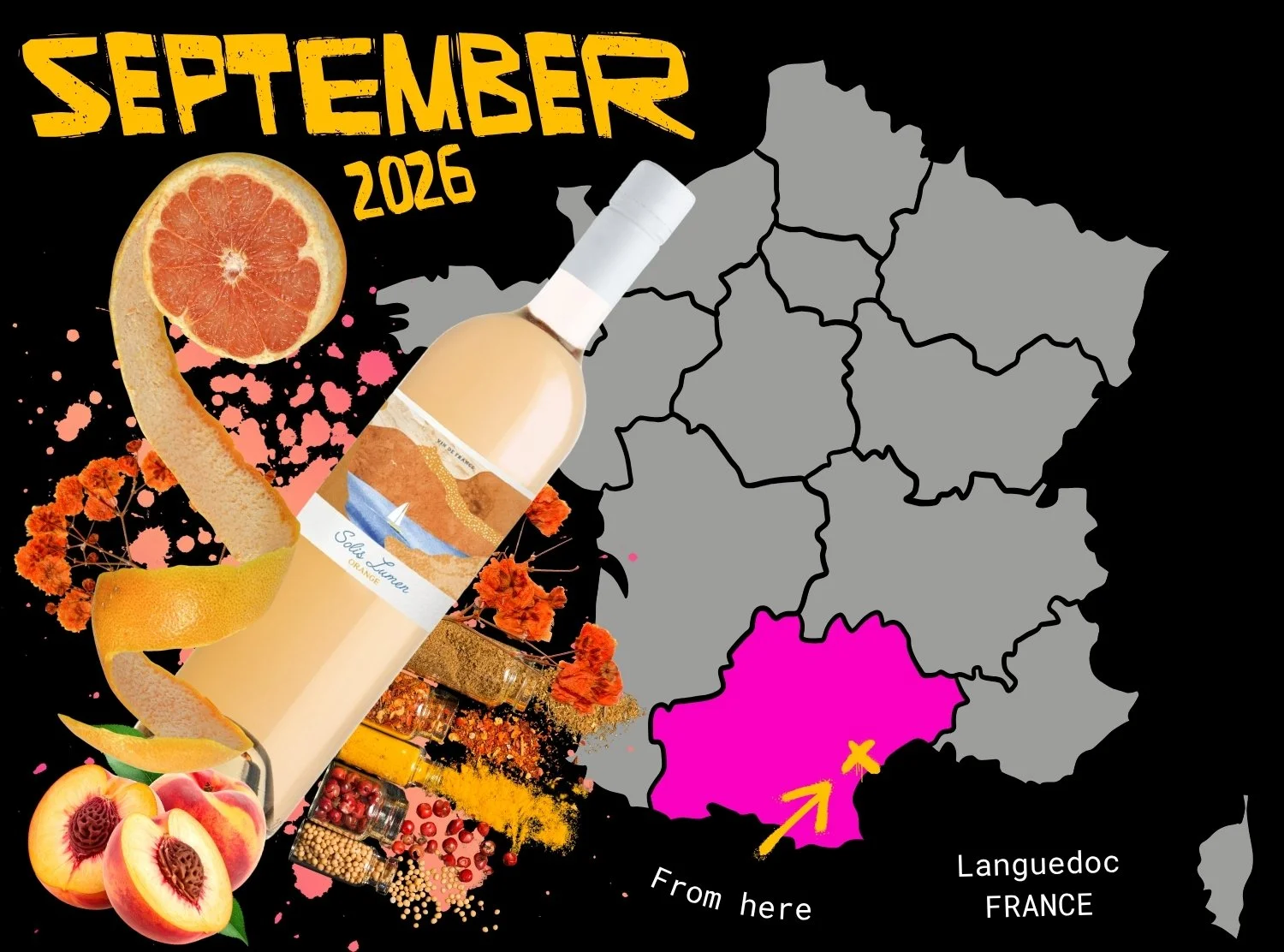
DOMAINE MONTROSE ‘SOLIS LUMEN’ ORANGE MUSCAT & GRENACHE BLANC
‘Solis Lumen’ is Latin for ‘The Light of the Sun’ because this wine is perfect for long days that HOPEFULLY if the Gods love us AT ALL will soon become cool days.
-
IS THIS A FRENCH JUICE CLUB OR A HOOLIGAN JUICE CLUB?! Ok but there’s a really good reason for this. There’s actually a few. Most of the wines I pour/sell/spill are from within a few miles of the mediterranean sea because the warm salty breezes, sunny days, and low disease pressure make organic and biodynamic viticulture easier than almost anywhere else in the world. Which means more people are doing it, which means more people are doing it EXCEPTIONALLY. France has miles and miles of Mediterranean coastline and also several thousand years of practice farming it. Yes, Italy has more coastline, but I speak much better French than Italian (I actually speak no Italian). This particular estate is near Pézenas, a town built on the site of a Roman fort that Pliny the Elder wrote about, which then became the seat of government for the region, known as the “Versailles of the Languedoc.” SHE DOES IT ALL!
-
If someone asked me which grape variety was doing THE MOST I would reply MUSCAT without hesitation. This is not usually a good thing! I’ll be the first to admit that Muscat is doing too much! Which is why when I try one that DELIGHTS me I pay extra attention. Muscat is one of the most naturally aromatic varieties on the planet. There are 200+ variations of it listed but the one in this bottle is the OG. Genetic research shows it’s the oldest variety still grown in France, planted by the Gauls before the Romans even got there. It’s got small berries which make the super intense flavors even more concentrated and it’s considered a “noble” grape everywhere it’s grown (which is in every country that makes wine) because it can be successfully turned into a HUGE range from dessert-sweet wines to skin-contact aged wines.
-
Domaine Montrose doesn’t advertise themselves as one of the most respected family estates in the Languedoc. They don’t need to! They’ve been proving it, instead. FOR OVER THREE CENTURIES! The winery was founded in 1701 and has been passed down for nine generations, with father Bernard and son Olivier Coste now at the helm. These lads have the modern know-how but have kept their egos out of it and simply continued making the wine as it always has been. They farm sustainably, make wine carefully, and sell it for much less than they could get for it. THANK YOU BOYS!
-
My tasting note for this wine had a lot of exclamation points! Ok for background I used to be a Sommelier at a restaurant called L’Orange. We had a great and large selection of orange wines as you can imagine. I have tasted LOTS of orange wine and formed MANY opinions about it and here they are: 1. It should not be cloudy. 2. It should have a slightly grippy texture, like licking velvet. (This sounds unappetizing but it’s the truth!) 3. It should have MORE aromas and flavors than a comparable white wine. 4. It should linger longer in your mouth than a comparable white wine. 5. It should be immediately, undeniably, unconfusingly, delicious. This wine is all those things. Candied orange peel, fragrant indian spices, dried apricot, and peach pit. Pair with African/Mediterannean dishes like tagines or anything with peanut sauce.
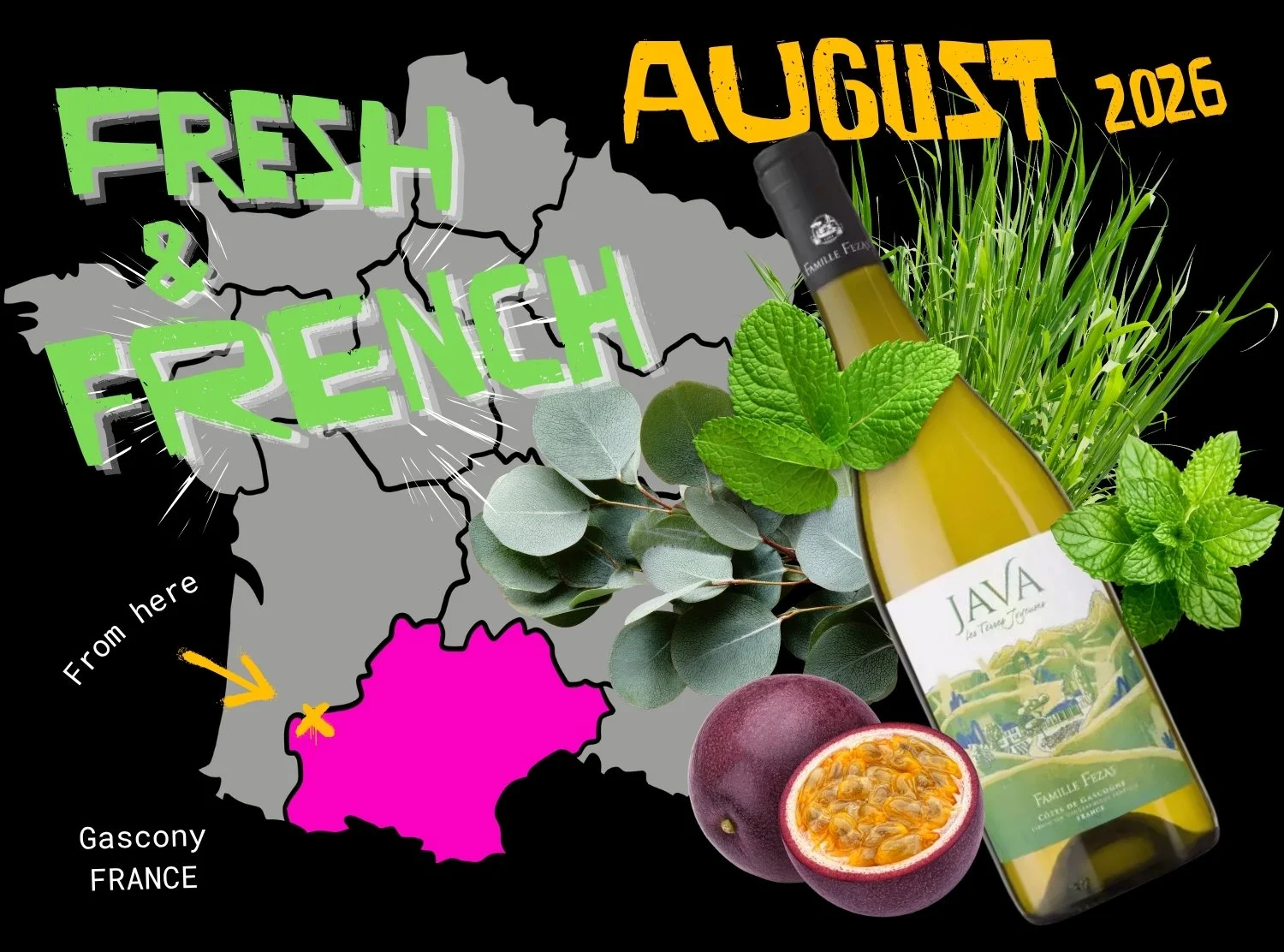
Famille Fezas ‘Java’ colombard blend
“Faire la java” is a French expression which equates to our English expression “Paint the town red.” A WINE NAMED AFTER PARTYING? CONSIDER THIS MY SALUTE!
-
Domaine Chiroulet, where this wine is made, is named after a SOUND! “Chiroula” is Gascon for the constant, whistling wind that sweeps through the rolling hills and sunflower fields of this sleepy ass corner of southwest France. Gascony is actually famous for producing Armagnac, the older cousin to Cognac, which are both brandies made from grapes! This area also boasts THREE of the countries officially titled “Most Beautiful Villages in France” which probably just means there are so many darling little medieval villages in this area that statistically this had to be true.
-
Colombard does NOT get the respect she deserves. She’s traditionally used for Cognac and Armagnac production because she holds high natural acidity while staying fairly neutral in flavor, even at full ripeness. This is great as a base wine for something that’s going to be distilled and forgotten in a barrel for several years but not exactly what fine wine is made of. Wine snobs the world over wrote Colombard off as basic brandy filler and nothing more. HOWEVER! Grown carefully, made thoughtfully, and blended with a bit of Sauvignon Blanc, a grape so fruity she’s dancing on the bar top? PERFECTION! And especially wonderful with summer produce, which itself is usually high in acid. (Tomatoes! Oranges! Peaches! Hell yeah!)
-
These folks have been working this land since 1893, but not always as winemakers. It started as a mixed farm. Crops, livestock, distilling, whatever kept the lights on! Great grandpa Alban Sourbès ran the place through the Pest That Ended Wine [phylloxera], a world war, and the invention of the engine. What a guy! Uncle Michel and Aunt Arlette took over in 1969 and went all-in on Armagnac, planting some of what we’re drinking today! Winemaking started in 1993, when Phillippe Fezas took the reins and said LET THE GRAPES SPEAK (I’m guessing here) and started turning the grapes into wine instead. THANK YOU PHILLIPPE! LOVE WHAT YOU’VE DONE WITH THE PLACE! And actually France loves what he’s done too; Famille Fezas has the highest level environmental certification, the Haute Valeur Environnementale.
-
Grassy, minty, FRESH AS FUCK cucumber salad wine! At only 11.5% alcohol it’s medically considered a mixer. It’s hotter than the devil’s taint out there. Shelter indoors. Eat something cold. Drink something GREEN and ALIVE. Here is a prescription for August in New Orleans: Build the juiciest, messiest tomato sandwich physics will allow. [Salting the tomatoes and letting them sit while the bread toasts doubles the juiciness because of OSMOSIS!] Eat it over the sink with an ice cold glass of Java and jalapeño chips. Breath deeply. TAKE TWO! MORNING AND NIGHT!
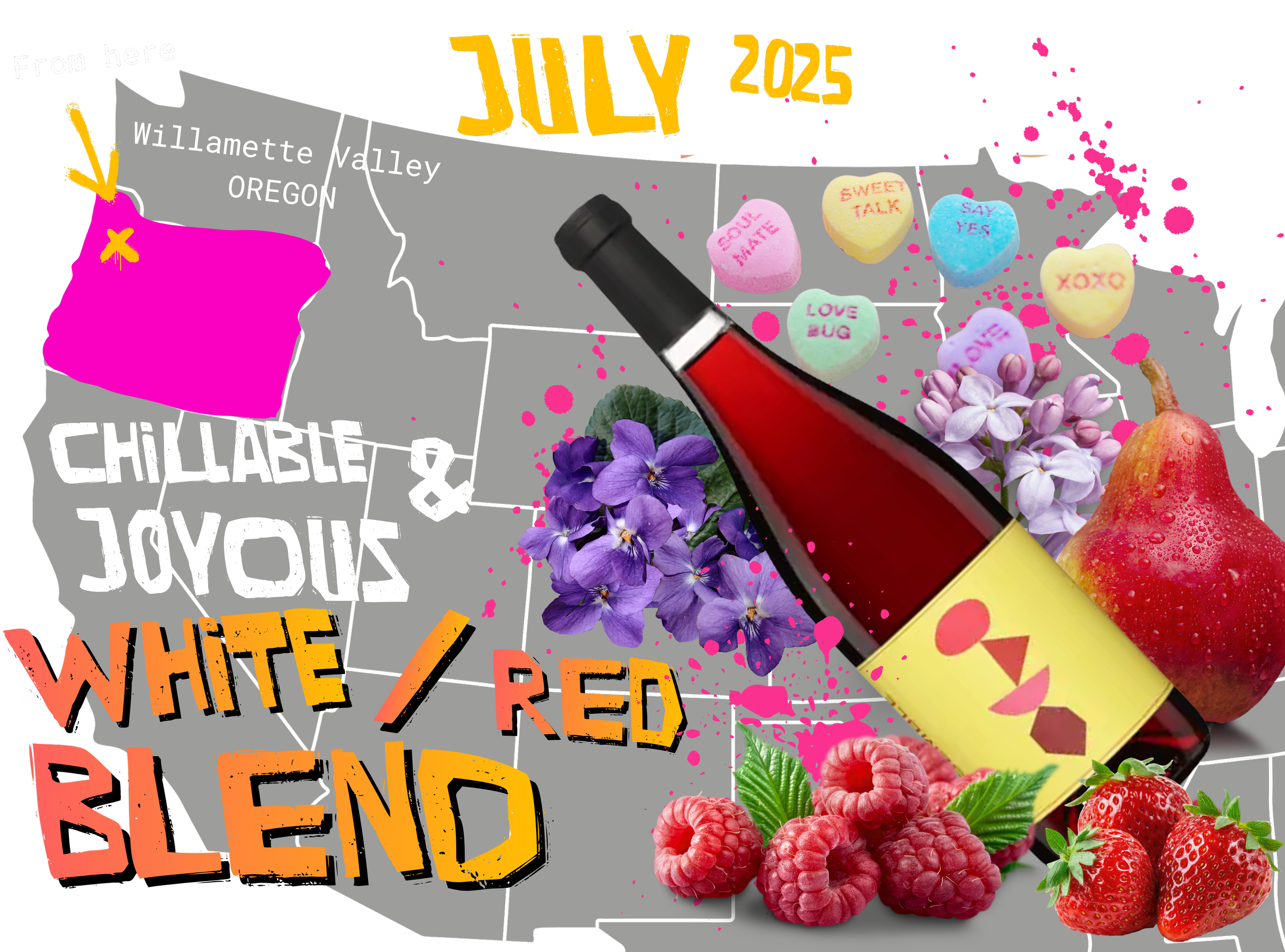
Grochau Cellars & Symbiose ‘Ensemble’ Red / white blend
A wonderful and weird blend made for the fridge! Evidence suggests this blend has never before been blended.
-
I’m sure you remember dying of dysentery while playing “The Oregon Trail” but do remember why the hell you were trying to get to Oregon in the first place? I’LL REMIND YOU! It was for the promise of a fresh start in the clean, healthy air of America’s most fertile farmland.
The valley of the Willamette River has some of the greatest growing conditions on our green earth. A combination of ancient volcanic eruptions, an old ocean floor, and a series of massive floods spent hundreds of thousands of years creating the most dynamic dirt in the country. PLUS! The nearby Pacific Ocean regulates the hot, dry days of summer with dewy mornings and cool, breezy nights. We were just there and needed a jacket at night. IN JULY! PRAISE BE! Grapes have been scientifically shown to love it just as much as I do.
-
A kitchen sink blend! 54% Pinot noir gives juicy red cherry and zippy acidity. This is Oregon, after all. 33% Pinot Gris gives it that rich silky texture and the red pear moment. Pinot Gris and Pinot Blanc are actually just genetic mutations of Pinot Noir that people liked enough to propagate. One man’s fault is another’s man’s fame, or however that goes. The other 13% is a blend of Gamay, Auxerrois, and Trousseau. These stooges don’t usually appear together but bring florals, fun, and a bit of white pepper spice.
-
This wine is a collaboration between a Grocheau Cellars, a Willamette Valley winemaker, and Symbiose, an importer based in Montreal. I’ve tasted with Grocheau Cellars at a few different industry events over the years and have been very impressed with their farming and flavors. They work with organic, family-owned vineyards and make food friendly wines for the Portland restaurant scene. This wine was made specifically for the Canadian market as a private label. But that all changed when the Fire Nation attacked! When the trade war started and halted the shipment of this wine across the border, I swooped in to make sure it would go to a good home - YOURS!
-
AND BABYGIRL IS IT EVER JUICY! She’s light, she’s bright, she’s silky. Think tart cherry, strawberry, red pear, bubblegum, and a little spice. There is no information whatsoever on how this wine was made. I have theories but frankly this wine is made for drinking, not overthinking. Here’s what the French Canadians have to say about it: Cette cuvée incarne l'essence même du rouge léger à boire frais. Which I’m pretty sure translates to: Why is your president bullying us?
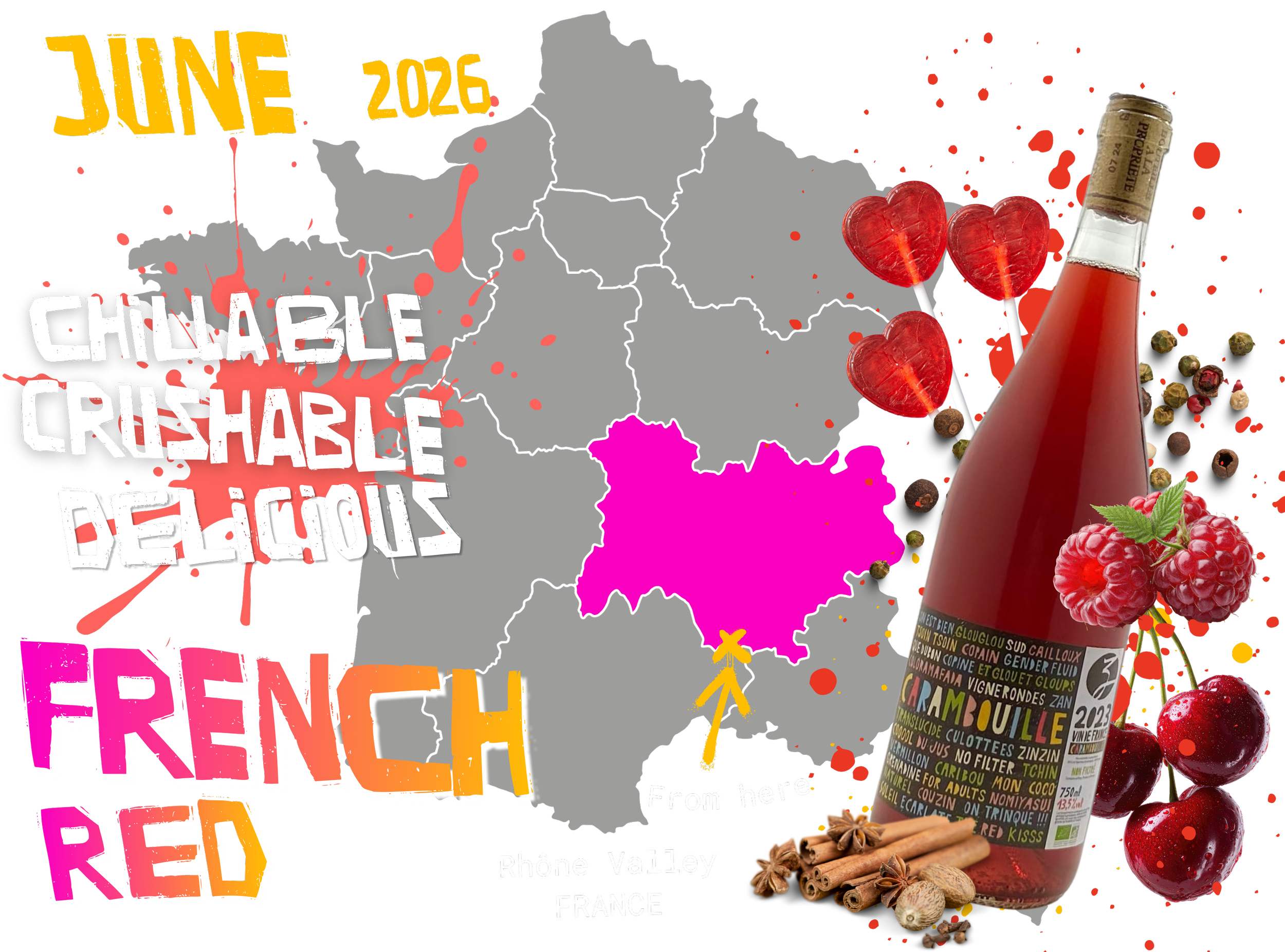
ESTÉZARGUES ‘CARAMBOUILLE’ RED BLEND
It was while selling THIS wine in Denver in 2021 that I decided I should start my own wine club so five years later as a birthday gift to myself I bought several dozen bottles (to give to you)! HAPPY BIRTHDAY!
-
Estézargues sit at the South end of the Rhone River valley in Eastern(ish) France. Today it’s a small village of around 600 residents, working the rolling hills around a fortified 12th century church. Flint tools and ancient pottery still surface on its rolled pebble and clay soil. Yeah, southern France has a long history of winemaking. I’ve said it a bunch. But this land is MARKED for winemaking FOR REAL. In 1896 farmers dug up a centuries-old double-faced head of Bacchus and Ariadne. THE GOD OF WINE HIMSELF?? PLANTED IN THE VERY SOIL THAT HAS BEEN FARMED SINCE PREHISTORIC TIMES? AND THIS IS THE WINE THAT GREW FROM IT? I’M TICKLED!
-
A BIG OLE BLEND! 70% GRENACHE, 10% SYRAH, 9% CINSAULT, 6% CARIGNAN, 4% MOURVÈDRE, 1% COUNOISE. Why are red wines from this region always blends of a bunch of grapes? Because sometimes the traditional way is also the smartest way. In ancient times it was passed down through generations of farmers paying close attention. Plant a mix because that’s the version that survives a rough year. Now we have genetic testing and climate data and we know that each varietal buds and ripens at different times, thrives in different vintages, and is susceptible to different pests and diseases. Today, planting a variety of grapes ensures you have a healthy harvest no matter what the vintage brings, while blending a variety of grapes ensures you have a delicious wine every year.
-
This place was founded in 1965 as your standard, crappy co-op. The kind that was all over Europe blending low quality grapes from a hundred growers into big batches of forgettable wine. BOO! HISS! Then along came Jean-François Nicq in 1989 to change the game! Influenced by natural winemaking LEGEND Marcel Lapierre, Nicq pushed the farmers toward organic farming and used zero additives in his winemaking. That philosophy is alive and well today under current winemaker Armelle Rouault, who’s out here producing over 20 different cuvees, some communal, some grower-specific, because why not do it ALL! Most of the original, founding families are still in the co-op generations later! JOB SECURITY LIKE NO OTHER, AND THEIR YEAR-END BONUS IS WIIIIINE?
-
I put back-to-back light-bodied reds in the club this summer because I wanted to prove a POINT! Red wine is for all-year round the same way white wine is for all-year round, so jot that down. Also this was a little nod to my wife who must be REGULARLY COERCED to taste even ONE SINGLE SIP of any wine that’s not red. My darling, if you’re reading this, you’re a freak. And this wine is for you. Bright crunchy cherry, raspberry, and a surprisingly spicy finish for added naughtiness. Chill hard and drink fast, preferably naked.
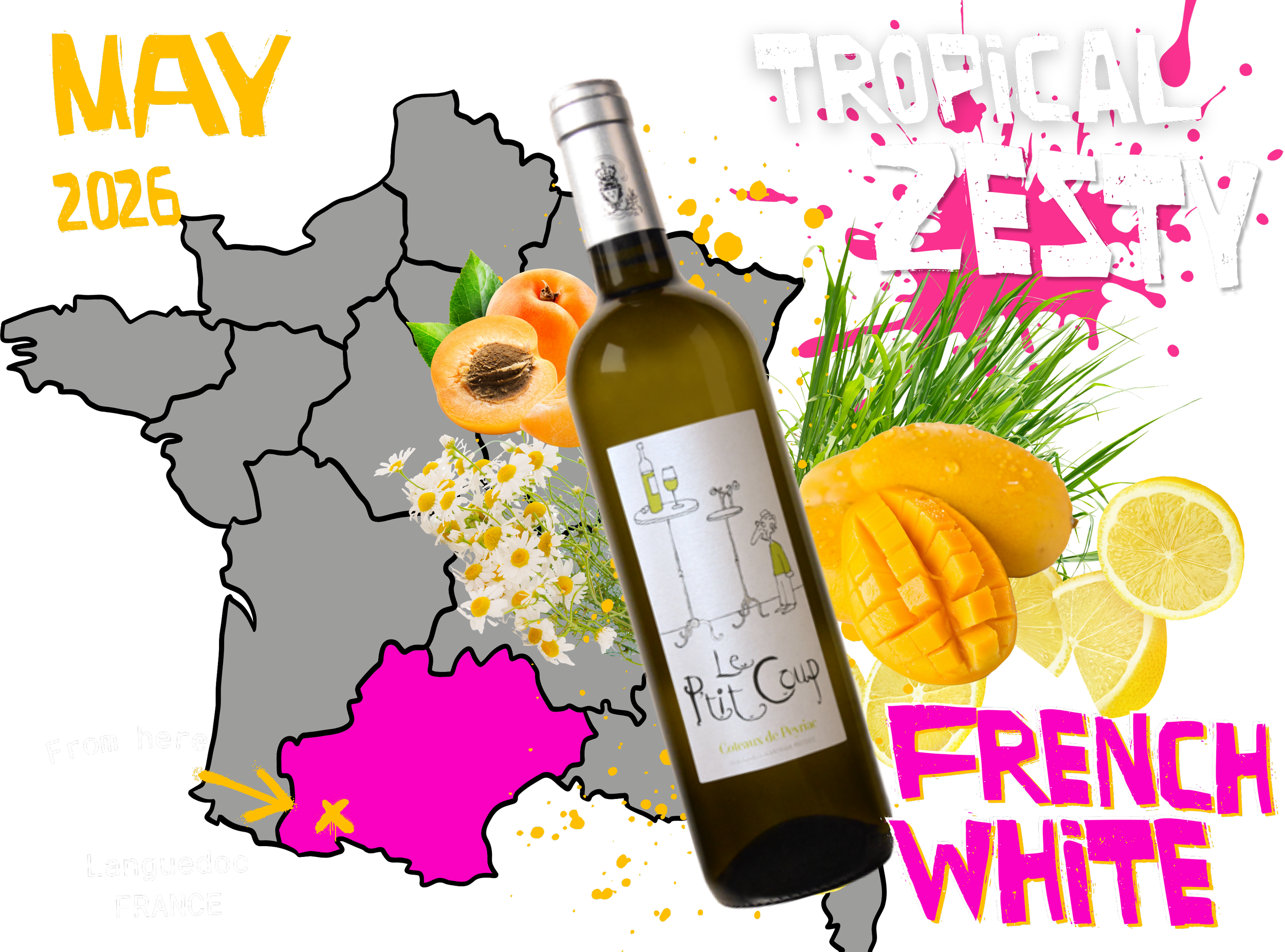
CHÂTEAU DU DONJON 'LE P'TIT COUP' Sauv Blanc blend
“P’tit coup” means “little nip” but I found myself drinking multiple glasses?? Then again I’m not a marketing professional??
-
Back to Languedoc, babes! This one's from Bagnoles, a teeny village ten minutes from Carcassonne. YES! THE Carcassonne! I played the boardgame a bunch and so was THRILLED to see this medieval fortress fairytale land in person last year. It’s one of the coolest places I’ve ever been and it’s in the gorgeous French countryside. Rolling hills, wild lavender and thyme, that legendary Occitan breeze that makes organic viticulture so manageable. The estate itself has a literal donjon (watchtower) rising up out of the cellar itself. ROMANTIC AS HELL.
-
Sauvignon blanc is a gateway drug! She’s brunch’s official sponsor which means she is also on homosexuality’s board of directors. Snooty dudes want to call her basic but they’re boring as fuck and their opinion doesn’t matter. She’s sharp, citrusy, and sassy, I mean grassy. This blend is half Sauv Blanc and half her mellow, sophisticated cousin Combard, who spent centuries being turned into brandy until most people stopped drinking brandy. They balance each other perfectly and I would absolutely lose to them in a game of Carcassonne.
-
I know I’m always going on about family wineries but Y’ALL. This 150 acre piece of land has been farmed by the same family for OVER 500 FREAKING YEARS. They’re a small, old-school operation and they care absolutely all the way. They hold the HVE level 3 (the highest tier(!) of the High Environmental Value certification, which shows third-party verified earth-protecting practices across biodiversity, pesticide reduction, and water management). Caroline and Jean Panis have been running the show since 1996. Someone get in touch with them and make a “Pillars of the Earth” style book about this family, please.
-
I’m realizing I’ve had a French Sauvignon Blanc blend for the May club wine two years in a row! I’ve done some soul searching and I believe this is why: Sauv Blanc goes great with shrimp eaten sitting in the grass and May is the time for that. Jazz Fest packs up and takes the worst of the tourists with it. The city quiets down and heats up and all I want to do is bop lazily around on my bike and eat po boys on the bayou. This wine is for that. Apricot, white flowers, lemon, mango, and a little grassy green feeling. Plus at only 12% alcohol the “little nip” bit was a lie all along.
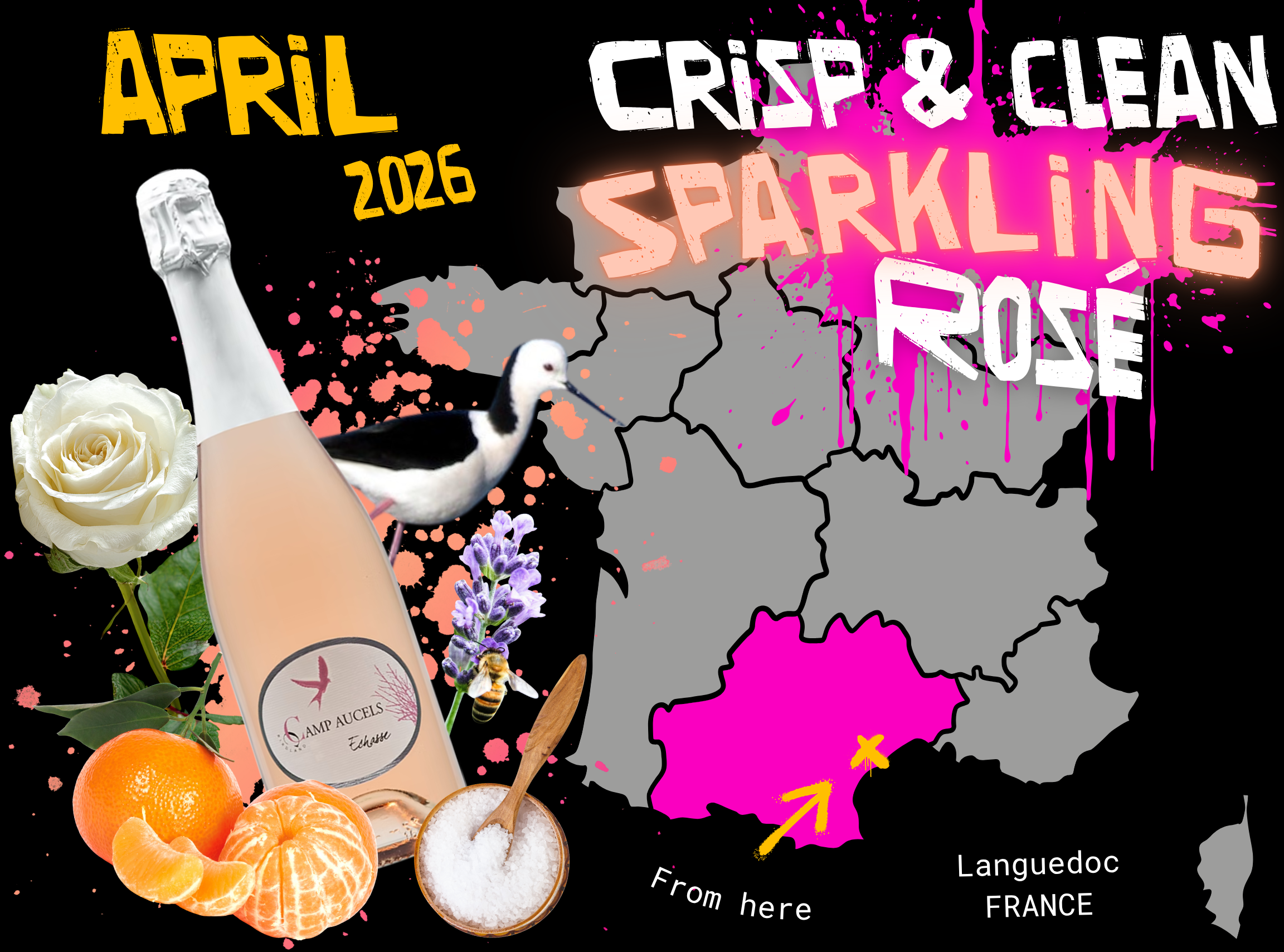
CAMP AUCELS ‘ECHASSE’ SPARKLING BRUT ROSE
This wine represents everything Hooligan Juice Club stands for: 1. Badass, independent, female winemakers. 2. Beautiful, organic farming. 3. Indigenous grapes 4. Clean, natural winemaking, and 5. BIRDS.
-
I just love southern France so much! The Languedoc region runs along the bottom of the country and is bordered by the Mediterranean sea to the south and backed by hills leading to the Spanish Pyrenees. This little estate is near Picpoul de Pinet, just a short drive from the sea. They speak Occitane (a local language) among crumbling roman roads and pine forests, and the whole region smells like dusty, resinous herbs since lavender, thyme, and rosemary grow as weeds in every ditch and roundabout. The seafood is amazing and the people are really tan! The constant warm breeze makes honest farming easier, and this broader region (Occitanie) has the highest concentration of organic vineyards in France.
-
The beautiful southern French tradition of blending a whole bunch of different grapes together to make a masterpiece! Rolle, Colombard, Muscat Petit Grains, Picpoul Blanc and Picpoul Noir, Cinsault, Grenache - what’s not to love!? Rolle is the french name for the Italian Vermentino (where it’s from) and we LOVE Vermentino: aromatic and juicy, kind of like Sauvignon Blanc but with a little more soft peach and a little less sharp cut grass. If you’re anywhere near the Mediterranean there’s a good chance it’s on the menu. But sparkling?? Organic? Rosé?! Way cooler!
-
Cathy is the female winemaker extraordinaire! She is uncompromising in her commitment to traditional, native varieties and meticulous organic farming. The wines are all named after birds because her true passion is the bird sanctuary she runs as a side project. ‘Echasse’ is named after the Stilt, a small bird that spends its summers in the coastal ponds of the region. See picture for cute!
-
It’s April in New Orleans! The greatest time of the year! Festivals, crawfish, po-boys, pool days. All of it begs for dry pink bubbles! I DON’T MAKE THE RULES! This one is juicy enough to quench your thirst and crisp enough to pair with the saltiest/spiciest/messiest foods you can buy from a tent. It’s a traditional-method sparkling wine (the same way Champagne is made) and rests in bottle for a full year, so it’s creamier and less wild than a Pet Nat, but not as serious and bready as a champagne. No sugar added so it’s bone dry and no added sulfites so it’s GRAPES ONLY! AND SO CLEAN AND FRUITY AND DELICIOUS?? NOT EASY TO DO, FOLKS!
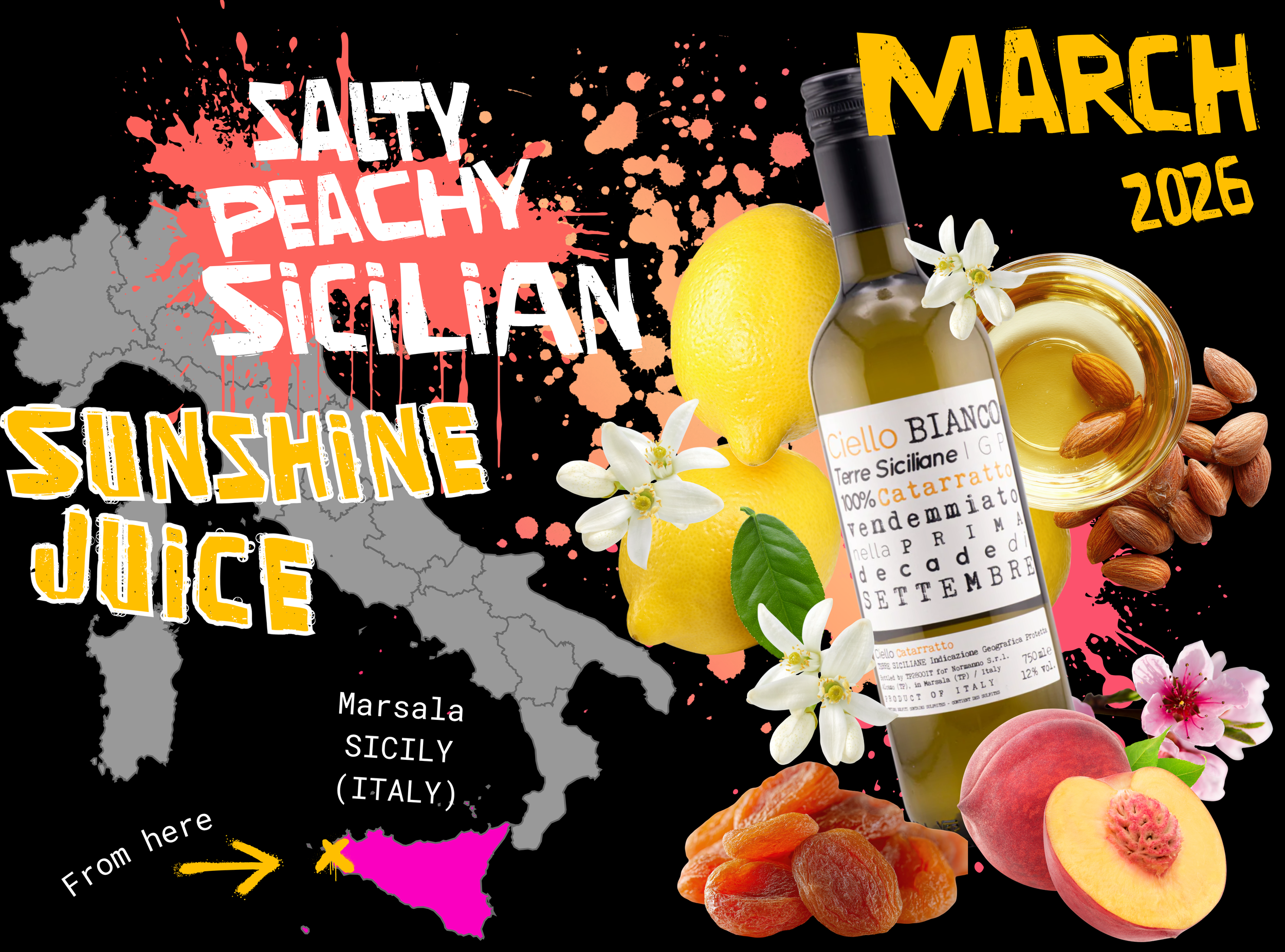
CIELLO BIANCO ‘TERRE SICILIANE’ CATARRATTO
There’s evidence of winemaking in Sicily from 4,000 BCE and Pliny gave it its flowers so I’m not even going to pretend like I’ve discovered something new here!
-
People have been writing about how great the food and wine from Sicily are for thousands of years! This triangle-shaped island that the boot of Italy is stubbing its toe on is also DRAMATIC! She has a huge range of climates, from snowy alpine, to one of the world’s most active volcanoes, to subtropical. Plus the high sunshine and constant dry breeze keeps rot and creepies away, which explains why over a third of Sicilian vineyards are organic! It used to be famous for strong, sweet wines that could survive a rough sea voyage to faraway lands. Now it’s famous for that thing that happened to Jennifer Coolidge’s character in White Lotus.
-
You are going to be hearing A LOT from me about CATARRATTO because I am OBSESSED, Y’ALL! She’s indigenous to the island and is the most planted variety on it. This lemony-tart but silky variety used to be mostly made for the production of Marsala, a strong, sweet wine similar to Port or Sherry, but those have declined in popularity at the same rate as our great grandmothers so now Catarratto is getting the main character treatment she deserves!
-
Eric Narioo created this wine with the goal of bringing high quality, low-priced natural wine to the “people.” Doing the lord’s work of preventing planet-friendly wines from going the way of organic food and becoming only for high income folks! This cellar has been making Marsala since the 1860s but was converted in the 90s by the Vesco family to traditional, organic winemaking. GREAT WORK BUDS!
-
FOLKS! THIS IS IT! The rich, lingering, peachy, savory, sunshine quality I’m always aching for! I would shut this website down at once and make wine forever if I knew how to make wine like this! Bright and happy! Highly chuggable! Pairs with poboys, crawfish, pregaming before the concert, lemony/herby roasted things, or ruffles! Also (and I tested this MYSELF for science) it stays delicious for FOUR FULL DAYS in the fridge! WHAT THE HECK!
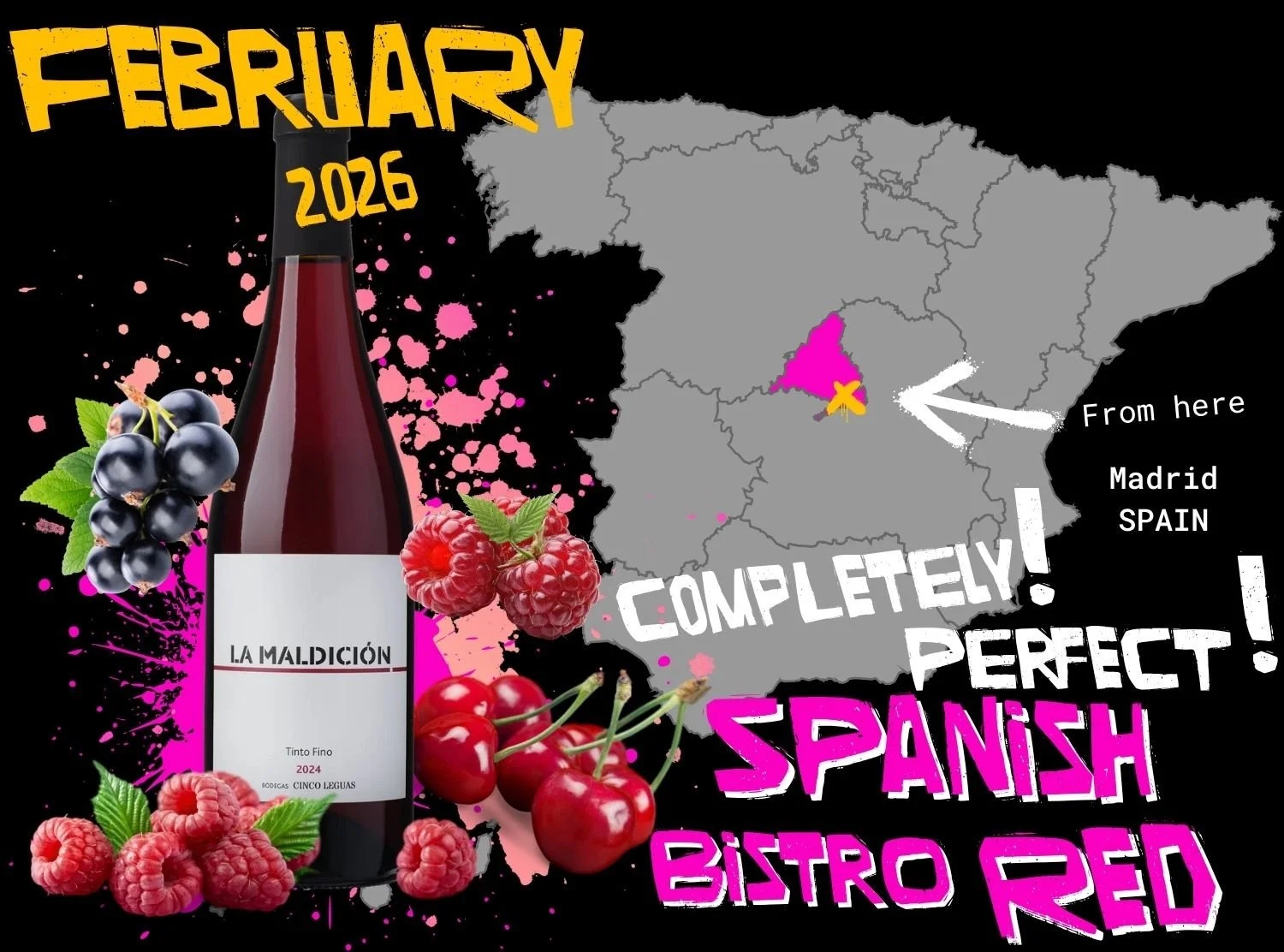
CINCO LEGUAS ‘LA MALDICION’ Tempranillo Blend
The name of the vineyard translates to “The Curse” and is a joke about how brutal the steep, remote vineyards are to work. Heroic viticulture!? Yielding a fruity, refreshing masterpiece!? I can’t get enough!
-
Dusty, crumbling monasteries and imposing mountains overlook these vineyards east of Madrid, where the grapes grow at an impressive 750m altitude - some of the highest and most rugged vineyards in Spain. This is the OLD world. Even the name “Cinco Leguas” has history: a royal decree from the 16th century said only wine grown within five leagues of Madrid was fit to serve at the royal court. This one made the cut. Shop local! Except if you live somewhere that can’t grow grapes! Then shop Hooligan Juice Club!
-
This ripe lil number is made from mostly Tempranillo with a little Malvar sprinkled in! Never heard of Malvar? Me neither! Not much is known about Malvar! It’s a very old and mysterious Spanish white grape. Tempranillo, however, is Spain’s absolute PRIDE AND JOY! She’s thick-skinned and makes deep, dark, long-lasting reds. I like to think of her as a mysterious jet-setting superspy because she goes by like 15 other names in various Spanish and Portuguese dialects and is a knockout everywhere she lands. (I actually just fact-checked this because I was like aw dang what if it’s only 12 and NOPE it’s EIGHTY. The mystery deepens!)
-
Mark Isart! A BIG DEAL winemaker and one of the founders of Commando G (a BIG DEAL wine). He decided to step out of the limelight and head back home to Madrid to farm his home hills and start this winery! He takes the caring of this famously difficult vineyard one step further with organic and even BIODYNAMIC FARMING! He’s resuscitating old, indigenous vineyards! He’s making wine in a former abandoned clothing factory! It’s all extremely Hooligan Juice Club coded! His goal was to produce “wines that are hard to stop drinking” and “thirst-quenching wines that seem as though the bottle has a hole in the bottom.” ACTUAL QUOTES! WHAT A LEGEND!
-
This juice is READY! It’s a really excellent example of a village table wine: something you’d be served at an outdoor table in the middle of a hot ass day while an enormous Cathedral’s bells chime for like 15 minutes straight. Medium in body, big in character. Plus, lower alcohol means you can have the whole bottle with nothing but your great personality. Or you can pair it with charcuterie, burgers, or tapas. UP TO YOU, BOO!
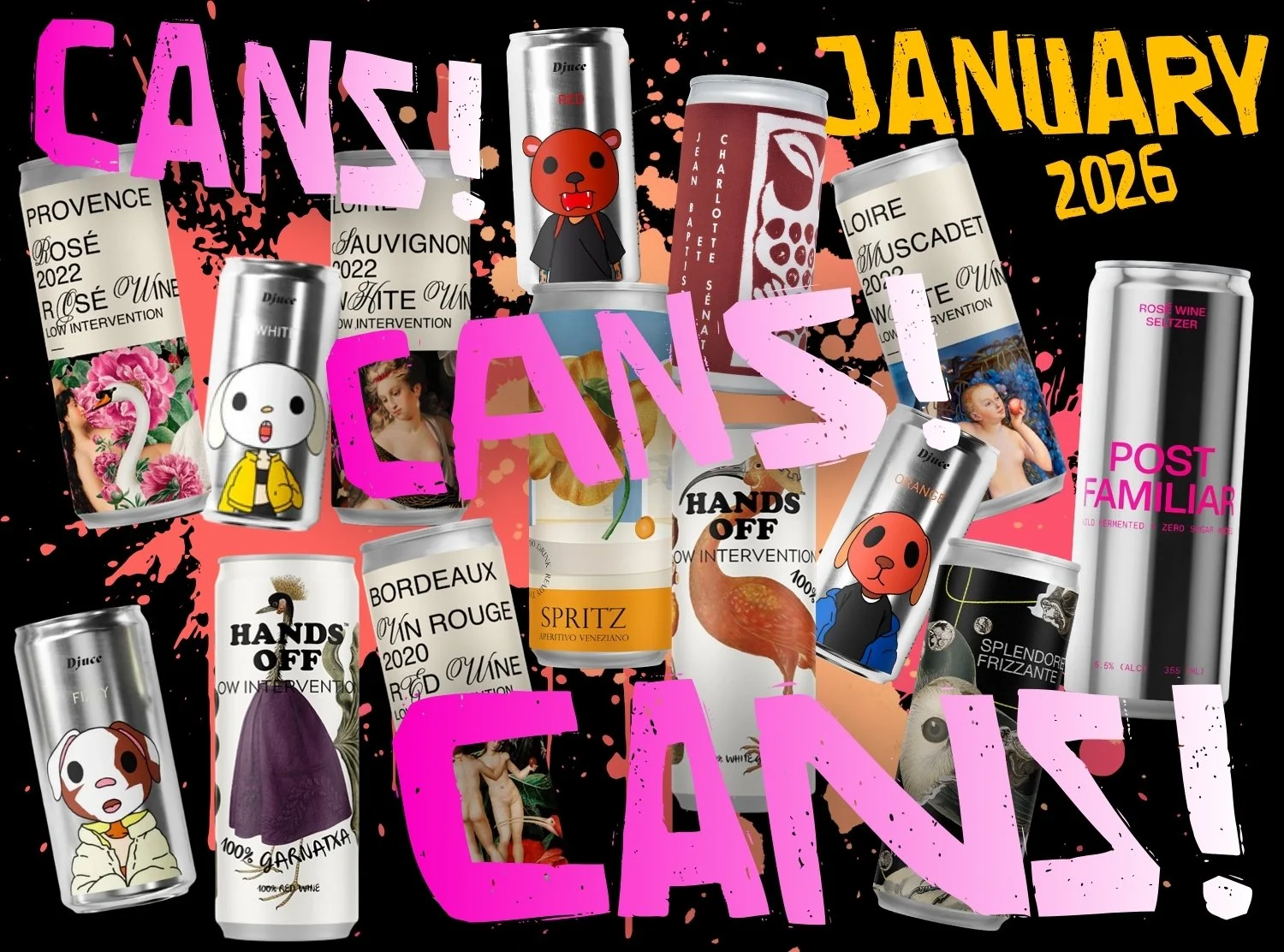
happy carnival y’all!
This month, members get a choice of 3 cans from a truly exotic collection snuck back in suitcases from Europe and beyond!
-
Let’s talk LOGISTICS, baby! Packaging is the single biggest contributor to wine’s carbon footprint- more than growing the grapes and making the wine, COMBINED. Because the great and beautiful swamp cannot grow grapes, shipping is important! Glass is heavy, fragile, and takes up a ton of space. Cans are less weight, more wine per pallet/truck, less fuel to move and save up to 70% in emissions! A GREAT REASON TO CRACK ONE OPEN!
-
Canned wine DOES NOT equal bad wine! It’s the exact same juice from the exact same winemaker. In fact, many wines are available in glass bottles in their local markets and cans for distribution to faraway countries. I’ve bought Hands Off bottles at restaurants in Barcelona and snuck the very same wine in cans to pool parties in New Orleans. Versatile! Cans for wine have a food-grade liner so there’s no metallic taste and they let in no oxygen and no light so the wine keeps its color and stays as fresh as the day it was packaged. Plus there’s no risk of cork taint, which ruins somewhere like 3% of all wine.
-
Can wine is officially a WHOLE THING! As of 2026 can wine sales have jumped almost 14% while sales of wine in bottles DROPPED 8%. Hooligans have proudly been cracking cans since 2024 but we didn’t need statistics to tell us we’re AHEAD OF THE GAME MY BABES! Even the lame legacy corporate wine are getting in on the game because as we know from The Devil Wears Prada, fashion trickles DOWN.
-
I’m betting there’s not a pocket big enough on the amazing costume you’re working on for a bottle of wine.. But you CAN (ha!) sneak wine into almost anywhere! Waterfall hikes! Movie theaters! Board meetings! Hot tub parties! State fairs! Oh, this old thing, officer? It's kombucha!
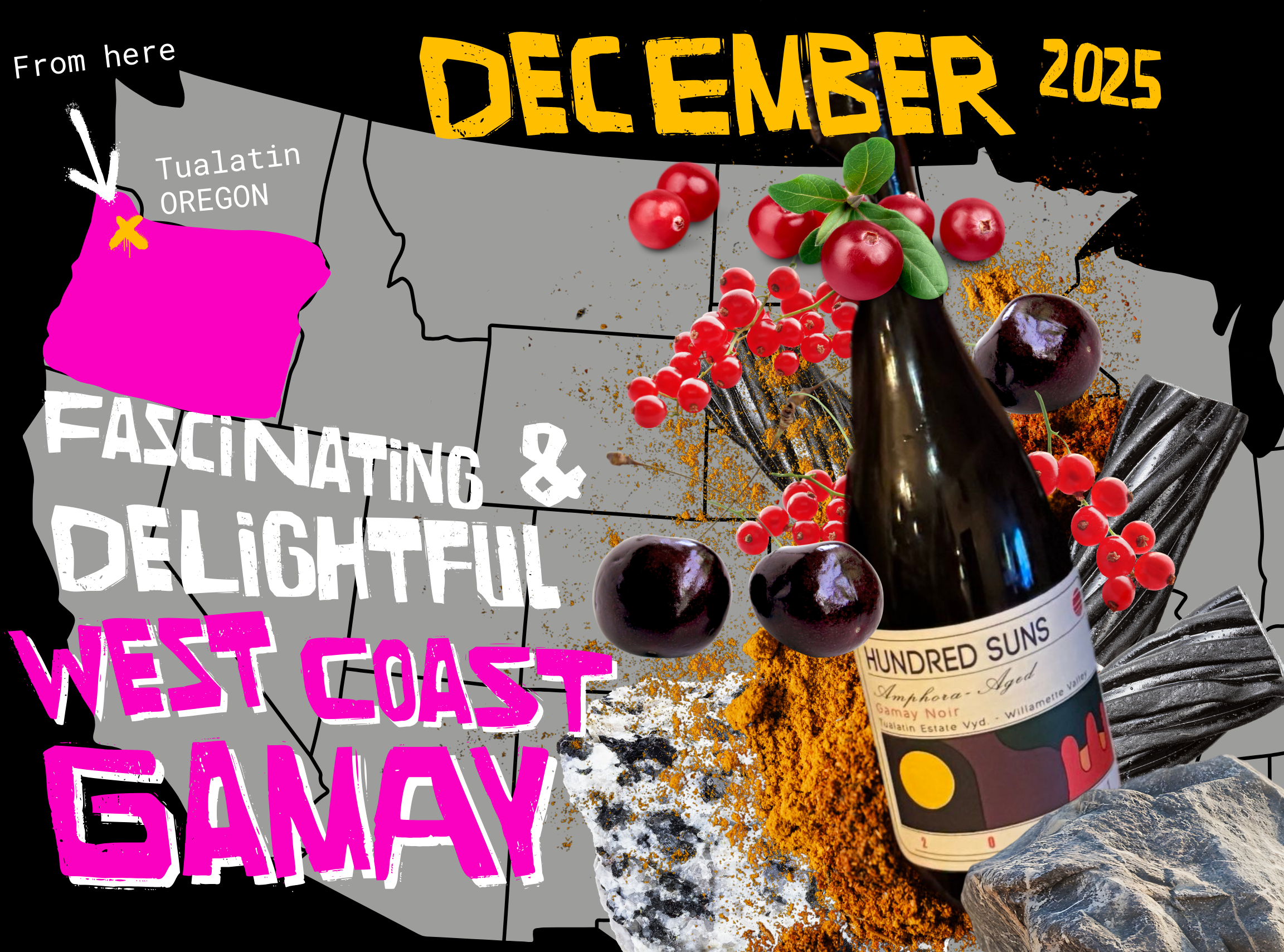
HUNDRED SUNS ‘amphora-aged’ Gamay noir
This wine is so under-the-radar there’s not a single mention of it anywhere online! I had to crop the bottle image out of a photo of my wife from Thanksgiving!
-
Oregon’s Willamette Valley is consistently one of the most exciting wine-growing regions on the planet. A turbulent geologic history of floods and volcanoes makes this some of the richest and most diverse soil in the world. Long sunny summer days, cool nights, and electric, experimental Portland energy. It’s most famous for Pinot Noir, but you’d be really missing out if that’s all you tasted from here.
-
Gamay Noir is my GORL. She has naturally low tannin (meaning less bitter and less mouth-drying) and is dramatically fruity with a tart lil kick. Structurally, Gamay is more similar to a white wine, which is why it’s gulped by the ton in bistros across France. Beaujolais is the region that put Gamay on the map. They set the bar and still do but Oregon gets style points for sure!
-
Where do I even begin? Renée and Grant are the husband and wife dream team behind Hundred Suns. [The name of the winery refers to the roughly 100 days it takes for grapes to ripen.] They are dear friends, amazing neighbors, and BRILLIANT winemakers. Grant spent over a decade making some of the highest awarded Pinot Noirs in the New World at Beaux Freres before starting this project. The pair make wine intuitively, with no road map and no hard rules. Each year is an experiment and 2021 was one of the best.
-
As if Gamay grown in Oregon wasn’t exciting enough - this one is aged in Amphora! Amphorae (the plural) are the earliest known wine vessels. Made of terra-cotta and sealed with straw and pine resin, these jars have been keeping wine safe and tasty since 2000 BCE. Why use them today? Terra cotta is porous (like oak barrels) but does not impart it’s own flavor to the wine (unlike oak barrels, which can make wine taste like buttered popcorn or vanilla extract). It’s a way to let the wine breath while it’s aging, giving it a softer, more velvety texture and earthy flavors like crushed gravel and potting soil. In all? Expect flavors like red cherry, blueberry, licorice spice, and old-growth rainforest. Hell yeah!
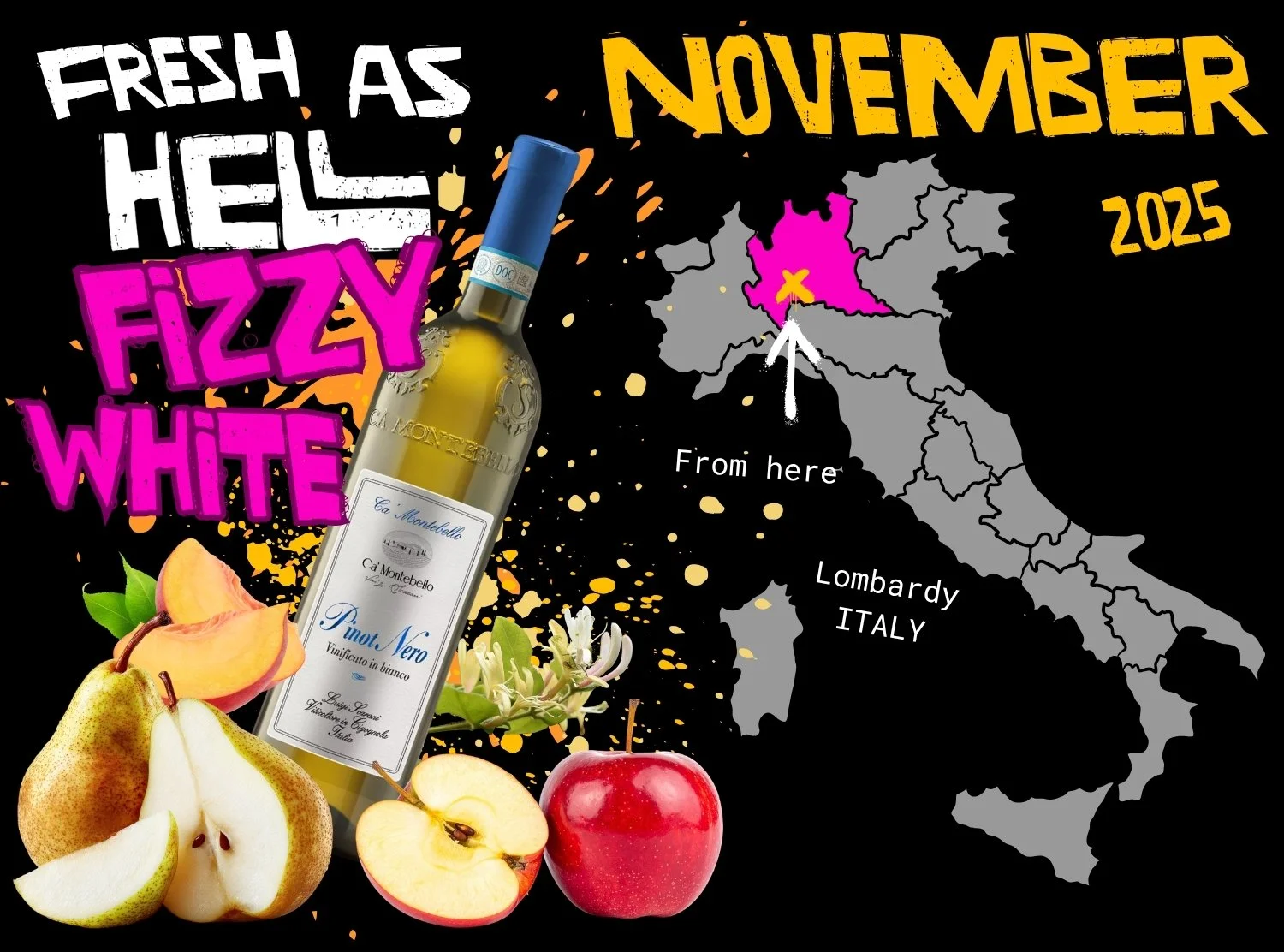
CA MONTEBELLO PINOT NERO ‘FRIZZANTE’
Have we really never had a Pinot Noir in the club?? And our first one is a sparkling WHITE from Italy!? WHAT A WHACKY WINE CLUB.
-
Oltrepo Pavese is in Lombardy, about an hour south of Milan, and definitely under-the-radar. It’s “famous” for sparkling Pinot Nero (Noir in Italian), coppa (a cured meat), truffles, and pasta (obviously). Monks have been making wine here since at least the 800s, spending their days in the hilly Po river valley with their best buds dining on the absolute finest treats in quiet contemplation. That’s almost certainly not how monastic life actually works but it’s how I choose to picture it!
-
Pinot Noir is the most legendary grape of them all. I SAID IT. It’s difficult to grow, ridiculously delicious, and makes the world’s most famous red wines (Red Burgundy) and also the most famous sparkling wines (Champagne). BUT HOW!? All the pigment in wine comes from grape skins. Pinot Noir has thin, light-colored skins to begin with so you can make any style of wine you want! Want a white? Squish the grapes and ferment the strained clear juice by itself. For rose, squish the grapes and let it hang out for a day before straining - pink wine! If you want a red, it’s going to take a bit of effort - at least a week or two of stirring the grapes and skins together twice per day with a big paddle (at least when I did it).
-
A family affair! This operation has been run for generations by the Scaranis family. Its current ringleader and maestro is Luigi and let’s just say this man is an EXTROVERT. His wife Ines almost certainly does more work keeping the ship afloat than she claims to and the next generation is already stepping in. Son Alberto handles the commercial side while daughter Cristina brings her artistic touch to the winemaking itself. I LOVE EVERY BIT OF IT!
-
Time for some Italian Vocabulary! If this ever comes up during a trivia night you’re winning that bar tab for the team baby! Italian wine has three levels of sparkling: 1. Vivace (meaning lively or vivid). These are barely sparkling, just a fun lil texture for ya! I actually don’t know if I’ve ever seen one of these but they allegedly exist! 2. Frizzante (meaning fizzy or semi-sparkling). These have softer bubbles which let the fruit flavors from the grapes shine through more. Moscato, Lambrusco, and many Proseccos are this style and I freaking love them! 3. Spumante (meaning fully sparkling). These are intensely bubbly, with a scrubby or foamy texture, like Champagne or Cava. Your November lil darling is the second one. Because the pressure is lower the bubbles are gentler and dissipate more quickly. It kind of drinks like a fancy apple cider. Think golden apple, soft pear, and a little fizz. Here’s the real fun n freaky part! This wine is JUST AS DELICIOUS flat as it is fresh! How many champagnes can say that!?
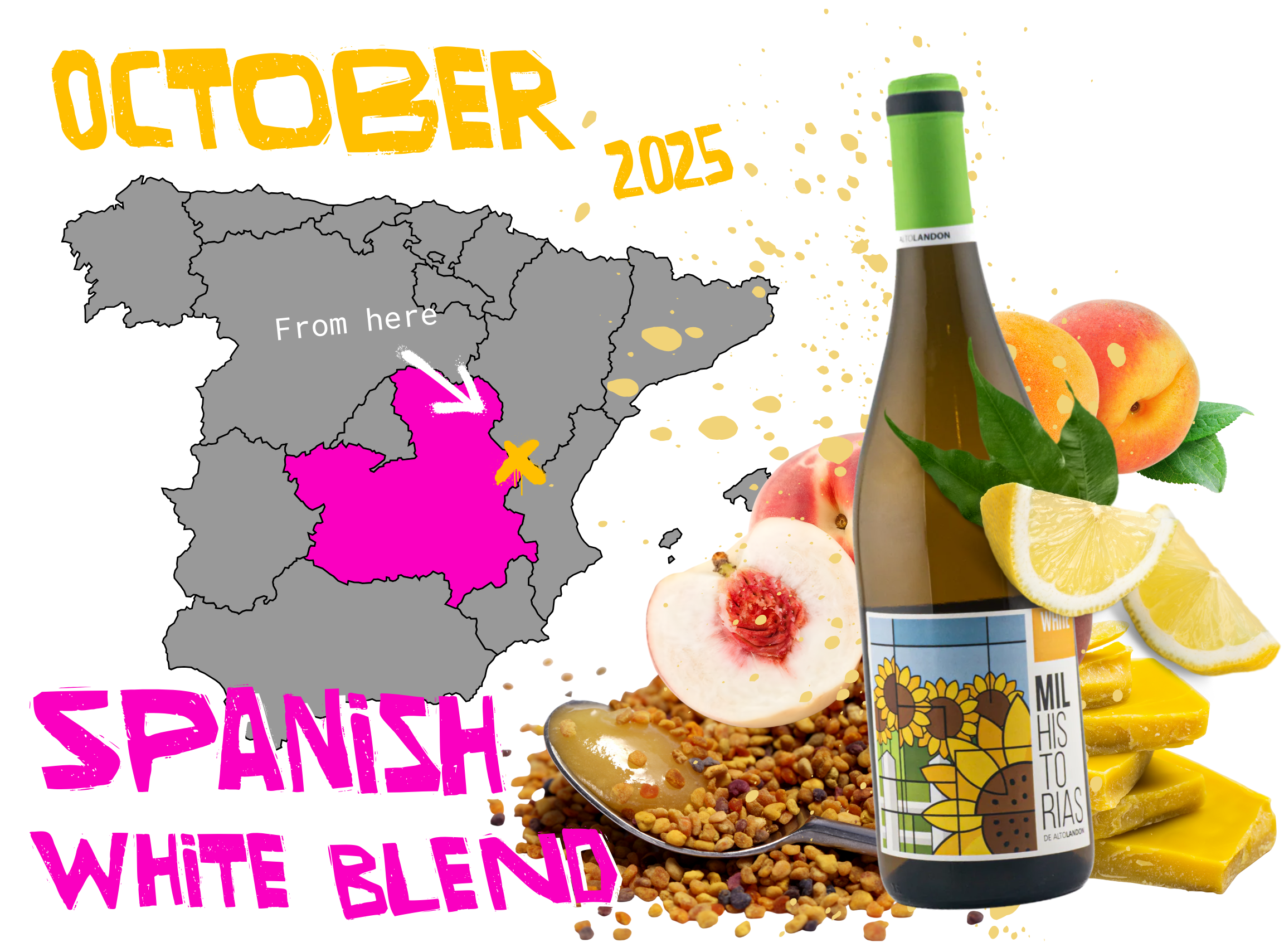
Altolandon ‘Mil Historias’ White Blend
I tasted this and was BLOWN AWAY! This wine punches way above its weight class. Beautifully aromatic, complex, textured, and OH YES DARLING: JUICY.
-
Manchuela sits high on a windy plateau in central Spain, at nearly 1,100 meters above sea level, making Altolandon one of the highest-elevation wineries in the country. Hot days, cold nights, poor rocky soils, and constant wind make organic farming easier than in wetter coastal regions. La Mancha is famous for cheap, corporate, mass-produced wine so it was a BLESSING to discover Altolandon’s beautifully grown bangers changing the game!
-
BABY LOVES A BLEND! Grenache Blanc and Grenache Gris make up the majority giving her a full body, silky texture, and waxy, honey character. Chardonnay keeps things tight with that tart lemon freshness. Muscat à Petits Grains (the full name of this form of Muscat) and Viognier bring the aromatics. Flowers! Peaches! Apricots! It all works together so freaking well! THIS IS WHAT EXCELLENT WINEMAKING TASTES LIKE!
-
Altolandon was founded in 1998 by Rosalía Molina, an enologist, and her husband Manolo Garrote, a vineyard manager, with a shared mission to revive winemaking in their overlooked region. From the start, they farmed organically, expanded slowly plot by plot, and committed to low-impact, regenerative practices. Rosalía runs the cellar, Manolo runs the vines, and together they’ve built a quietly radical estate rooted in balance, patience, and respect for the land. Makes me wanna cry!
-
I JUST LOVE IT WHEN A WINE SURPRISES ME! I’m not usually a huge fan of Viognier or Muscat but here I go again being totally delighted by them both! Turns out, in the hands of an expert there’s not a single grape that’s not delicious. This blend has it all and kept me coming to the glass for more, always discovering something new until it was gone way too fast.
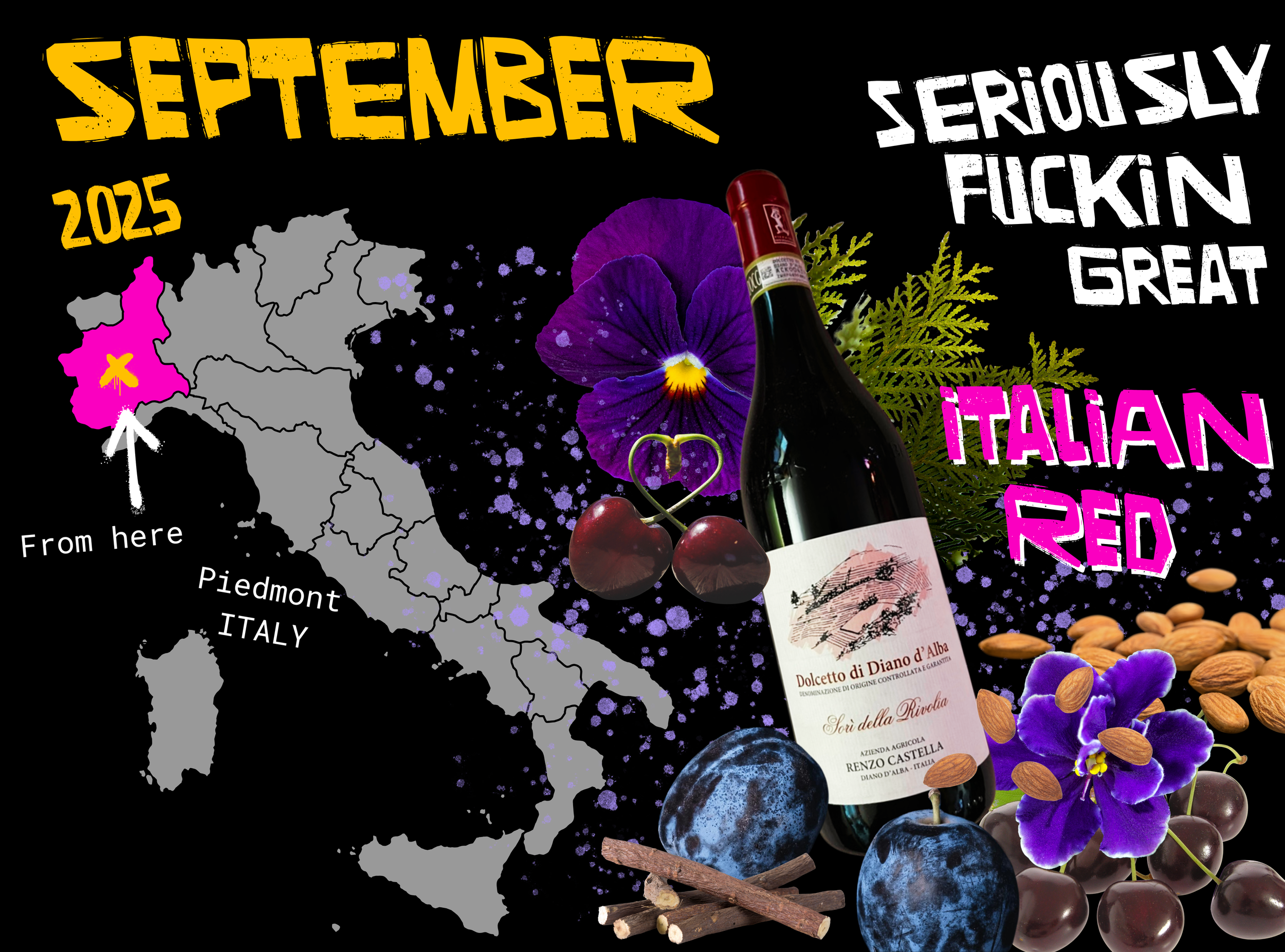
Renzo Castella ‘Sori della Rivolia’ Dolcetto di Diano d’Alba DOCG
The long name is because the Italian government declared this the best place in the world to grow this particular grape and I deeply agree.
-
Diano d’Alba is high in the Langhe hills of Piedmont, overlooking Barolo country and guarded by the snowcapped Alps. The vineyards are surrounded by hazelnut groves and medieval towers and Dolcetto LOVES IT HERE. The Italian government is very much on the same page - Diano d’Alba has been certified (DOCG) as the very best place to grow Dolcetto in the world. WELL THEN!
-
Dolcetto translates to the “little sweet one” but is actually never made into a sweet wine. The world of wine is ancient AND silly! It’s historically been considered a lesser grape compared to Nebbiolo, which makes the famously baller Barolo and Barbaresco wines. But it’s Dolcetto that’s often drunk at the dinner tables in this region. Grown well (and this one very much is) it’s JUST AS GOOD as great Nebbiolos (fight me) and frankly deserves your attention.
-
The Castella family has been in this region for generations. Renzo is famously unpretentious and does not give a damn about marketing or hype which makes him even more of a legend in my book. The wine tells the story and frankly speaks volumes.
-
She smells bold but drinks smooth as silk with black cherry, violet, dark chocolate, and spice. This wine is passed around sommelier circles and whispered rather than shouted about, lest we let too many people in on the secret and then can no longer afford it. Let’s drink it while we still can!
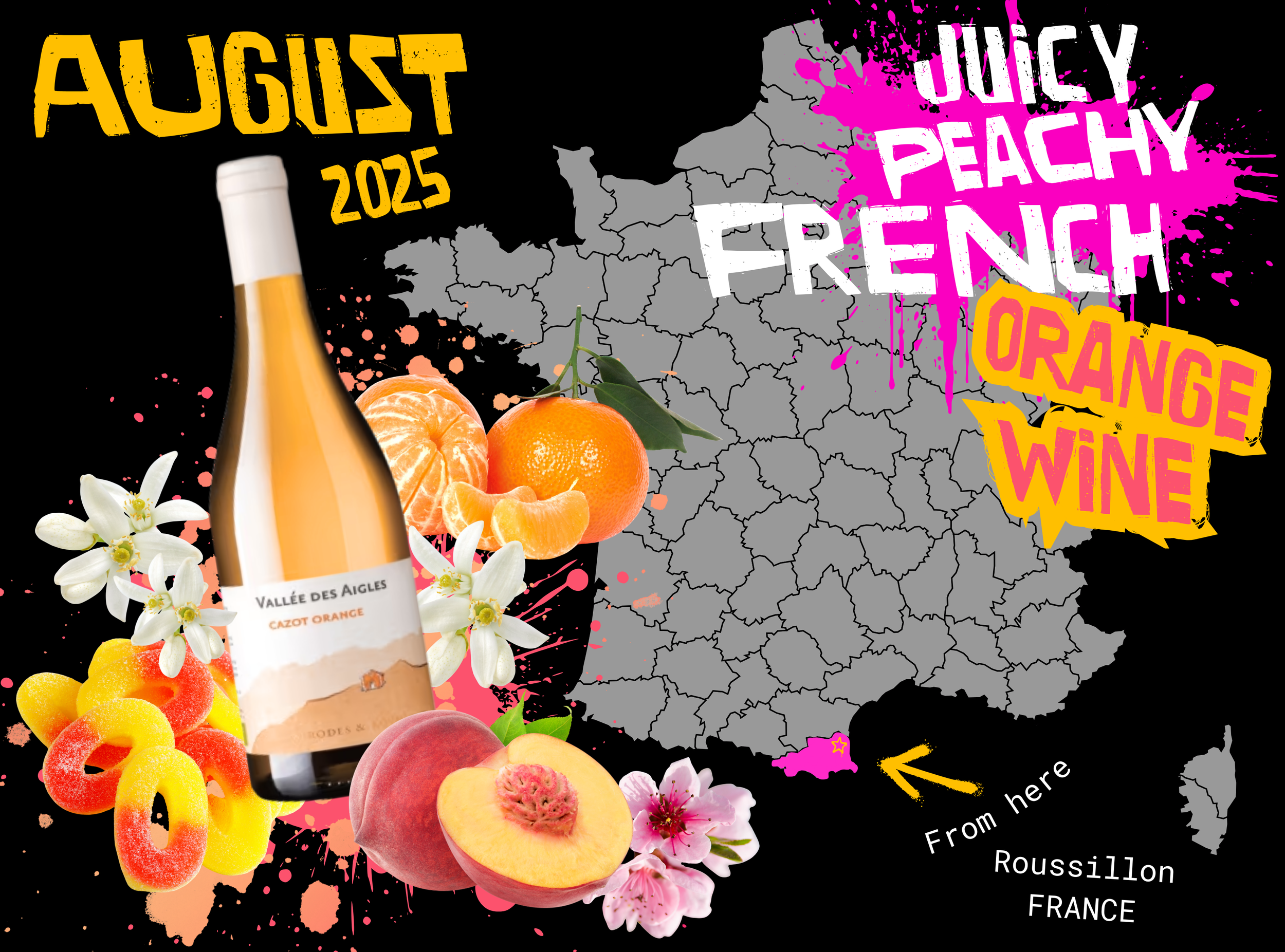
SERODES & KOVAC ‘CAZOT ORANGE’ grenaches
The most versatile and interesting orange wine I tried all year! You deserve a lil grown-up peach snapple for making it through the Summer.
-
Roussillon is its own world. This corner of Mediterranean France is defined by Catalan culture - a rebellious, romantic, rustic seaside vibe that I am frankly obsessed with (Barcelona is also Catalan). Locals think of themselves as Catalan first and French (or Spanish) second. Think sleepy stone villages, cork oak forests, and crumbling castles, all surrounded by rolling hills of vines. The dry, sunny climate makes organic farming a bit easier, so even tiny family vineyards can grow excellent fruit without chemicals. Wine here feels ancient. Probably because they’ve been doing it for thousands of years.
-
Grenache is originally from Spain, where it's called Garnacha. This grape is genetically unstable, and mutated over the years to create several different variations. Garnacha Blanca is the albino variation, (yes, the same kind humans and animals get). Garnacha Gris (grey) is the light-skinned version. Both Spanish and French winemakers have made use of all 3 variations of Garnacha for all 4 styles of wine (plus dessert wine!) for hundreds of years. NEAT! That’s because Garnacha is VERSATILE! It has naturally low tannin, making juicy, fruity wines with rich, silky textures.
-
Boris Kovac grew up in the vineyards of Serbia, son of a famed winemaker and professor. He wanted to be a painter, but the vines have him in their clutches and now he makes his art with wine. David Serodes comes from a long line of winemakers in southern France, though his family lost their vineyards during World War II. He set out to reclaim that tradition, learning every corner of the wine world from labs to cellars to soils. The two met in wine school and became fast friends. Today they make flavorful, honest, distinct wines in defiance of industrial sameness.
-
LET ME JUST SAY. This might be the most versatile orange wine I’ve tried! She’s full bodied, so expect a thick n lovely texture with just a bit of grip, like a light black tea. She’s got mandarin orange and peach snapple and fancy dried flower blend and whatever peach rings would taste like if they weren’t sweet. What’s not to love! This goldilocks wine honestly pairs with everything under the sun, but it’ll really blow your mind with a rich fish dish (Almondine? Scampi? Yes!) or a simple bowl of slow-cooked beans with fresh herbs. Use a ton of oil or butter in either because you deserve it.
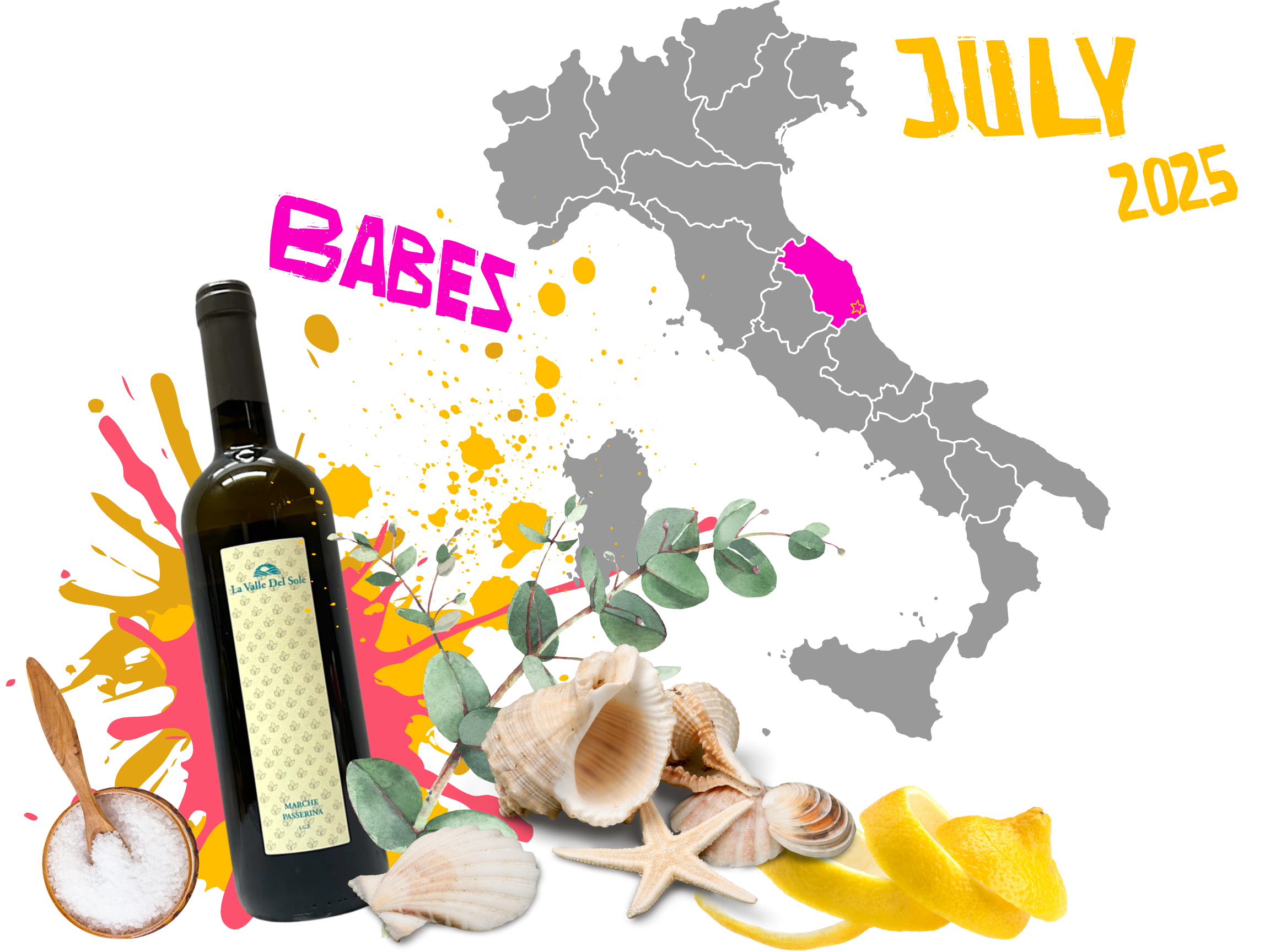
LA VALLE DEL SOLE PASSERINA
A truly elegant bottle of coastal Italian liquid sunshine. Just because you’ve never heard of Passerina doesn’t mean she doesn’t matter!
-
Offida is a hilltop medieval village shadowed by the Sibillini and Laga mountain ranges and cooled by salty breezes from the Adriatic Sea. It’s been famous since Roman times for wine growing and lace-making (both extremely sexy) and now, as then, the focus is on small, family-run wineries.
-
Passerina is my GIRL. She’s indigenous to La Marche and evolved over millennia to THRIVE there. Her natural high-acid and need for late season heat means she’s not phased by warmer summers. OH TO BE SO RESILIENT AND ZESTY.
-
Sisters Alessia & Valeria Nicola own and run this small winery with their father. They started farming organically in 1989, presumably because they know what’s up. WAY TO GO LADIES.
-
Bright, zippy, and bone dry. Think lemon peel, fresh wild herbs, and a touch of sea salt. It’s made in concrete tanks so not even a hint of oak. Pairs with pools, oysters, fried sardines, and PO BOYS BABY. Serve chilled and try to remember to share.

Villa di Corlo ‘Rolfshark’ Lambrusco
The woman who makes this wine earned herself the title “The Queen of Lambrusco.” Honestly what else do you need to know? It’s sparkly, dry, pink wine made by a QUEEN OF WINE.
-
Add Emilia Romagna to your bucket list THIS INSTANT. It’s Italy’s food capital and yes it is where ALL of the following are from: Parmigiano-Reggiano, balsamic vinegar, prosciutto di Parma, and lasagna bolognese. And the wine alongside those goodies in the fields and on the tables? Just one, babes: LAMBRUSCO.
-
Lambrusco is actually the name of both the GRAPE that the wine is made from (a red grape - Lambrusco Grasparossa) and the STYLE it’s made into (bubbly, refreshing, pinkish-reddish wine)! HOW FUN!
-
Winemaker Antonia Munari is the QUEEN of new wave Lambrusco! She pioneered a hardcore sustainable approach: 100% organic farming, and a winery that's solar-powered and carbon-neutral, eliminating all greenhouse gas emissions as of 2012 (what the FUCK!)
-
Lambrusco had a heyday in the US in the 70s and 80s when all things Italian were incredibly trendy. Unfortunately, people’s palates were different then. They preferred their wines basic and sweet. Because of the demand, Lambrusco became a huge industry, and the wines became industrial, mass-produced, and boring-as-hell, which in turn gave Lambrusco a bad name. BUT NOT ANYMORE! There are fantastic, fruity, frothy, FUN Lambruscos to be had if you know where to look (and I do!) This one is dry and peppery with fresh wild strawberry and blackberry candy vibes. Pairs with pizza and pasta!

Maker ‘orange’ skin-contact vermentino
Pride month wine! Terah Bajjalieh, an LGBTQ+ winemaker, keeps it fabulous and fresh with this juicy yet savory lil number. And it’s perfectly fanny pack sized!
-
Lodi has played an important role in the history of California. It’s in the hot San Joaquin Valley but is cooled at night by the same foggy pacific breezes and weed smoke as San Francisco, just 90 miles west. The first vineyards were planted by Italian and German immigrants in the 1880s, which is why Lodi has some of the oldest vines on the west coast. Its climate is perfect for grapes and HUGE quantities grow here. You can find every major variety at every quality level, from Bota Box and Sutter Home to incredible independent winemakers who package in cans!
-
Vermentino is a lesser known and definitely under-appreciated grape. She’s crisp and fresh with a wild side, like salty ocean spray and resiny Mediterranean herbs. Indigenous to Spain but celebrated in Coastal Italy, she was likely brought to California by Italian immigrants during the gold rush, and WOULDN’T YOU KNOW IT thrives there too.
-
Terah Bajjalieh is a native Californian foodie-turned-winemaker. After working in marketing with Master Sommeliers she got her hands dirty, working harvests in Argentina, Spain, New Zealand, France, and Australia, before coming back home to the west coast to show us what she learned. This is the (female-led) wine scene we’ve been waiting for!
-
Bright and juicy, with a wild lil savory side! Think fresh lemongrass and thyme, with a big squeeze of OJ and a salty Pacific kiss. Don’t overthink this one, babes! She’s meant to DRINK! Pairs with Thai or Vietnamese food or bike rides or sneaking into movie theaters.

Nono company ‘Jardiner…’ bordeaux blanc
A DELICIOUS modern take on a stuffy grandpa classic! That description probably makes men MAD hahahaha!
-
I don’t think there’s a wine region in the world more famous than Bordeaux, France. Every wine textbook I’ve read (a lot) starts with Chapter One: Bordeaux. Why? Honestly, it’s a centuries-long saga of politics, geography, and backroom deals a la Game of Thrones. And also it’s a really excellent lil estuary crossed by rivers and rocky hills which grows INSANELY GREAT grapes. Bordeaux historically and currently cranks out the most famous and expensive wines in the world. They’re mostly the kinds of red wines that oil tycoons keep in their cellar for 18 years before drinking. But! tucked between all that hype, you can find whites like this one: bright, fresh, and rebellious against Bordeaux’s big red reputation.
-
This bottle is a 50/50 split of Sauvignon Blanc and Sémillon — Bordeaux’s classic white duo! Sauv Blanc brings the zip: citrus, green apple, a snap of herbs and mouth-watering high acid. Sémillon smooths it out with rounder textures and soft honey notes. Together they’re like a hot lesbian power couple! Sharp edges softened by a little weight, loud, zippy flavors balanced by softness and depth. SEXYYYYYY I JUST LOVE THIS SHIT
-
Jardiner is the brainchild of Vignobles Lacoste’s crew, artisans who believe wine should grow out of the earth, not the boardroom. The “NoNo” name signals their refusal to follow the status quo of industrial farming and winemaking. Like all HJC wines, these folks use minimal chemicals and natural techniques to create pure fruit flavors.
-
DANG THIS WINE SURPRISED ME! The label is strange as hell and it’s a Bordeaux Blanc, which doesn’t usually send my tithers into a whizzy. AND YET! In my glass? DELIGHTFUL! It has a lot going on! Waxy, soft texture and alternating soft, melony, wildflower moments and tart, lemony, passionfruit thrills. Fun to chug AND fun to sit with and think about? HELL YEAH! LET’S!